



By Jones Gadama
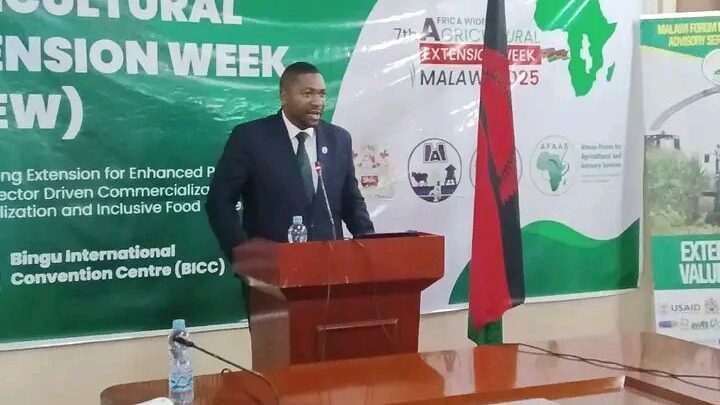
Malawi is set to host the 7th Africa-Wide Agricultural Extension Week in Lilongwe from May 12th to 16th, 2025.
The event, which attracts delegates from all African countries, aims to bring together stakeholders in the agricultural sector to discuss and share knowledge on the latest developments and innovations in agricultural extension services.
Minister of Agriculture, Sam Kawale, said the activities of the week will focus on areas such as using digital services, including artificial intelligence, in agricultural advisory services.
He emphasized the need for Malawi’s Agricultural Advisory Services to be rebranded to accommodate the use of technology and digital services.
“We need to rebrand our Agricultural Advisory Services to keep up with the changing times,” Kawale said, adding that, “The use of technology and digital services is crucial in providing efficient and effective agricultural advisory services. We are calling on all relevant stakeholders to be part of the Agricultural Extension Week activities.”
The event is organized by the African Forum for Agricultural Advisory Services (AFAAS) and the Malawi Forum for Agricultural Advisory Services (MaFAAS) in conjunction with the Ministry of Agriculture.
MaFAAS Executive Member, Rex Chapota, said the activities of the week provide opportunities for players in the agriculture sector to showcase their services and products.
“The Agricultural Extension Week is a platform for us to share knowledge, experiences, and innovations in agricultural extension services,” Chapota said, adding that, “It is also an opportunity for us to learn from each other and identify areas for improvement. We are excited to host this event in Malawi and look forward to the participation of delegates from across Africa.”
The Agricultural Extension Week will feature various activities, including plenary sessions, panel discussions, and exhibitions.
The event will provide a platform for stakeholders to share their experiences, challenges, and successes in agricultural extension services.
The use of digital services, including artificial intelligence, in agricultural advisory services is becoming increasingly important in Africa.
Many smallholder farmers in Africa face challenges in accessing agricultural information and advisory services, and digital services can help bridge this gap.
“Digital services can provide farmers with access to real-time information and advisory services, which can help them make informed decisions and improve their productivity,” Kawale said, adding,”We are committed to harnessing the power of technology to improve agricultural productivity and food security in Malawi.”
The 7th Africa-Wide Agricultural Extension Week is expected to attract delegates from across Africa and beyond.
The event will provide a platform for stakeholders to share knowledge, experiences, and innovations in agricultural extension services, and to identify areas for improvement.
The 7th Africa-Wide Agricultural Extension Week is a significant event that will bring together stakeholders in the agricultural sector to discuss and share knowledge on the latest developments and innovations in agricultural extension services.
The event provides an opportunity for Malawi to showcase its commitment to improving agricultural productivity and food security, and to learn from other countries in Africa.
With the theme of using digital services in agricultural advisory services, the event is timely and relevant to the needs of the agricultural sector in Africa.