

Columns
The Fatigue Mandate: How Peter Mutharika ‘s pre-legitimised return is eroding Malawi’s moral Capital – writes Z. Allan Ntata

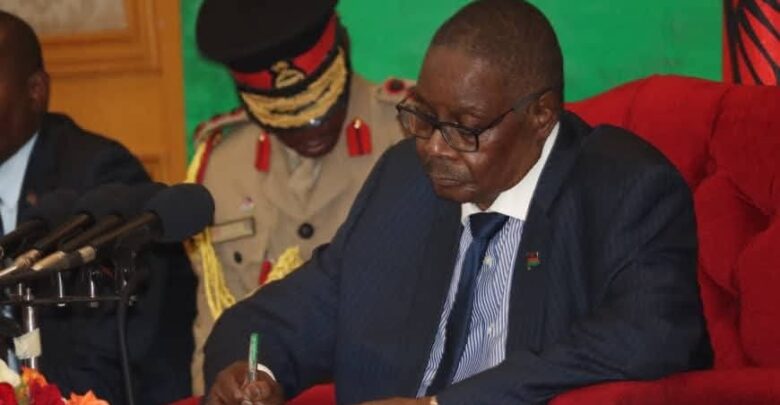
When Peter Mutharika returned to State House, many interpreted his victory as the people’s verdict against failure. But in politicojuridical analysis, his ascent represents something more complex; and more dangerous. It was not a restoration of trust; it was an evacuation of hope.
Malawians did not vote for Mutharika because they believed in him. They voted because they had ceased to believe in anyone else. This distinction is crucial, because it determines whether a government begins its life with moral credit or moral debt.
1. Pre-Legitimisation by Fatigue
Every new regime begins with some form of legitimacy capital: the symbolic credit extended by citizens who expect moral renewal. But Mutharika’s capital was not earned through vision, competence, or persuasion. It was pre-legitimised by fatigue: a weariness born of unfulfilled promises, institutional drift, and disillusionment with the Chakwera administration.
This kind of pre-legitimisation is the most deceptive form of political inheritance. It gives power the illusion of popular blessing without the substance of moral authority. Mutharika did not inherit faith; he inherited exhaustion. And fatigue, when mistaken for trust, is politically combustible.
2. The Delusion of Moral Restoration
What we are witnessing now, in the early appointments at Capital Hill, is not a reassertion of control, but the unfolding of a profound politicojuridical delusion.
Believing that his return to power signifies moral redemption, Peter Mutharika has begun to treat the electorate’s protest vote as a divine endorsement, and to govern as though fatigue were faith.
His appointments reveal the extent of this misreading. From the reinstatement of Dr. Jane Ansah; the very “Tippex Queen” whose controversial handling of the 2019 elections once ignited nationwide protests; to the inclusion of Frank Mbeta, a lawyer once cited by the Anti-Corruption Bureau for alleged bribery, Mutharika has surrounded himself with symbols of moral exhaustion rather than renewal.
In a normal politicojuridical climate, no leader seeking to rebuild national trust would have chosen such figures. But Mutharika’s calculus is not moral. It is reactive. He reads public anger at Chakwera’s failures as a blank cheque for rehabilitation of the old guard.
Mutharika seems to be working on the mistaken belief that because one’s enemies have fallen, one’s own sins are absolved.
The pattern is now frighteningly clear through the appointments of Richard Luhanga, until recently under interdiction for corruption allegations, now serves as the Inspector General of Malawi Police Service, Steve Gangata, a figure dogged by scandals involving falsified academic credentials and graft, holds office as a Minister of State, Ruth Mbilizi, and others whose names have long floated through public discussions of corruption, abuse of office, or partisan complicity.
Norman Chisale, who until his political appointment was facing multiple criminal cases, will now sit in the National Assembly while also serving as the President’s personal bodyguard.
Each of these appointments deepens the perception that this is not a government of restoration but of revenge and repetition.
The message to the public is unmistakable: Power, not purity, determines qualification.
In politicojuridical terms, this is a prelegitimisation overdraft: a government spending moral capital it never possessed, converting electoral relief into administrative recklessness. It is the state mistaking temporary public fatigue for enduring forgiveness; a fatal misunderstanding of what legitimacy means, and how quickly it can evaporate.
3. Overdrawing from a Negative Balance
Unlike Chakwera, who began his presidency with genuine moral legitimacy and slowly squandered it through inertia and inconsistency, Mutharika starts from a deficit.
He is attempting to withdraw authority from an account that was already overdrawn.
This is why his appointments feel heavier, riskier, and more tone-deaf. They are being made under the illusion that the people’s exhaustion equates to absolution. But fatigue does not forgive, it only pauses judgement. And when that pause ends, disappointment returns with double vengeance.
4. The Continuity of Illegitimacy
Politicojuridically, what we are seeing is a tragic continuity of error. Chakwera’s failure was the mismanagement of genuine legitimacy: he began with moral credit and lost it through indecision. Mutharika’s error is even graver: the misuse of inherited fatigue: he begins with moral debt and is spending as though he were rich.
In both cases, the moral centre of governance collapses. The institutions that should renew public confidence are instead being converted into sanctuaries for the politically loyal and the legally tainted.
5. The Politicojuridical Consequence
A State that continues to recycle legitimacy deficits becomes trapped in what API defines as the Circle of Negative Governance: a recurring cycle in which:
• citizens vote against dysfunction rather than for reform,
• power changes hands without moral recalibration,
• and every government begins with less public faith than the one before it.
This is how republics decay without coups. They die not from lack of elections, but from the devaluation of legitimacy: the quiet corrosion of moral meaning behind constitutional processes.
6. The Warning
The Africa Politicojuridical Institute warns that Malawi is now entering this danger zone. Mutharika’s early conduct; rewarding loyalists, recycling suspects, and ignoring public moral perception; risks institutionalising the very decay that brought down his predecessor.
A government founded on voter fatigue must tread with humility, not triumph. To act otherwise is to confuse protest with prophecy.
Mutharika’s pre-legitimised presidency must quickly rediscover the discipline of moral restraint, or it will collapse under the same weight of disillusionment that buried Chakwera’s moral promise.
Closing Reflection
Legitimacy is not restored by returning to power. It is restored by returning to principle. A fatigued nation does not need familiar faces; it needs a new moral grammar of governance.
Issued by:
Africa Politicojuridical Institute (API)
Realtime Governance Watch | October 2025
“Diagnosing Power. Restoring Legitimacy.”
www.politicojuridity.org.
2019