


By Burnett Munthali
Malawi stands at a critical crossroads as the nation prepares for the 2025 presidential election scheduled for 16 September.
This election has attracted fourteen presidential candidates, who officially submitted their nomination papers by 26 June 2025, making it one of the most competitive races in the country’s democratic history.
A recent Afrobarometer Round 10 survey reveals that 76% of Malawians believe the country is heading in the wrong direction, reflecting widespread public dissatisfaction with current leadership and governance.
At the same time, 84% of Malawians say they are “definitely going to vote” in the upcoming election, a sign of growing civic engagement and a population eager for change.
The Democratic Progressive Party (DPP) currently leads opinion polls with 43% support, followed by the ruling Malawi Congress Party (MCP) at 29%, while 14% of voters remain undecided.
The major issues dominating voter concerns include the economy, inflation, unemployment, and corruption.
Only 12% of citizens are satisfied with efforts to stabilize prices, while just 21% approve of the government’s management of the economy, according to Afrobarometer.
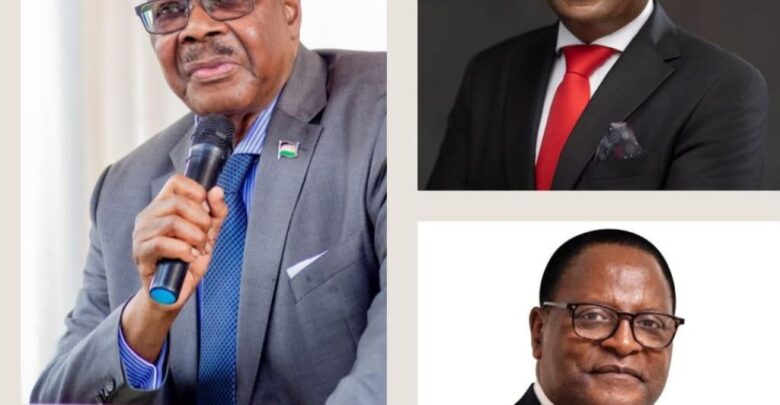
These findings present a major challenge for incumbent *President Lazarus McCarthy Chakwera,* who is seeking a second term on the MCP ticket.
Although Chakwera came to power in 2020 with high hopes and promises of servant leadership and reform, his administration has struggled to meet economic expectations, leading to diminished trust from many citizens.
*Former President Arthur Peter Mutharika,* the DPP candidate, is aiming for a comeback.
He is campaigning on a platform of restoring economic stability and infrastructure development, achievements his supporters associate with his previous term in office.
However, critics remember his administration for corruption scandals and authoritarian tendencies, factors that may complicate his bid for re-election.
*Dalitso Kabambe,* now leading the United Transformation Movement (UTM), is one of the younger candidates with a technocratic background, having served as the Governor of the Reserve Bank of Malawi.
Kabambe is focusing on economic revival and is attracting urban voters and professionals, especially the youth, who are demanding jobs, affordable food, and inclusive governance.
*Joyce Banda,* Malawi’s former president and the only female candidate, represents the People’s Party (PP) and is returning to the political scene.
She remains popular among women and rural voters, but her legacy is still tainted by the massive “Cashgate” scandal that occurred during her administration, despite her denials of any involvement.
*Atupele Austin Muluzi,* leader of the United Democratic Front (UDF) and son of former president Bakili Muluzi, is appealing to younger voters with a message of modern governance and digital innovation.
However, his political lineage raises questions about dynasty politics and the lack of fresh leadership in Malawi.
*Kondwani Nankhumwa,* once a senior DPP figure and now leading the People’s Development Party (PDP), is known for his grassroots support and strong communication skills.
His break from the DPP could divide the opposition vote or help forge a new political force depending on how the electorate responds to his new direction.
*Frank Tumpale Mwenifumbo,* presidential candidate for the National Development Party (NDP), is advocating for regional equality and federalism, gaining traction especially in the Northern Region.
His consistent message of inclusive development has earned him loyal support among those who feel left out of national development.
*David Mbewe,* a preacher and leader of the Liberation for Economic Freedom Party (LEFP), is appealing to religious and economically marginalized voters.
He brings a moral tone to the campaign, promising spiritual revival and a new economic direction, although his lack of political experience raises concerns about leadership readiness.
*Akwame Bandawe,* running under the Anyamata, Atsikana, Azimayi (AAA) banner, is advocating for youth, gender, and marginalized groups’ inclusion.
While his national visibility is low, his focus on grassroots empowerment and social justice could resonate with first-time voters.
*Reverend Hardwick Kaliya,* an Independent, is a respected human rights advocate and champion of disability rights.
Although he lacks political infrastructure, his campaign emphasizes ethical leadership and inclusive policies.
*Milward Tobias,* also running as an Independent, is known for his research and governance work in civil society.
His campaign is built on anti-corruption, institutional reform, and evidence-based leadership, but limited political exposure may hinder his chances.
*Adil James Chilungo, Kamuzu Walter Chibambo of PETRA, and Smart Swira* are also part of the crowded field.
Their national impact remains limited due to low public profiles and unclear campaign messages, though they may influence the race by raising specific policy issues.
According to Afrobarometer, the youth demographic—who make up the majority of the population—is demanding job creation, education investment, and access to financial support for entrepreneurship.
More than 50% of youth aged 18–35 are unemployed, and many express frustration with successive governments failing to prioritize their needs.
Support for democracy in Malawi is also declining.
In 2012, 76% of citizens supported democracy as the best form of government, but today that figure has dropped to just above 50%, indicating growing disillusionment with the political system.
In such a divided political landscape, it’s unlikely that any single candidate will win an outright majority in the first round.
This makes post-election coalitions and alliances more likely, much like the Tonse Alliance that brought Chakwera to power in 2020.
As voters prepare to cast their ballots, the stakes have never been higher.
Citizens are not only electing a leader but choosing a path for the country’s economic recovery, governance integrity, and social inclusion.
Whoever emerges victorious on 16 September 2025 will need more than just votes—they will need legitimacy, a clear plan, and the public’s trust to move Malawi forward.