


By Burnett Munthali
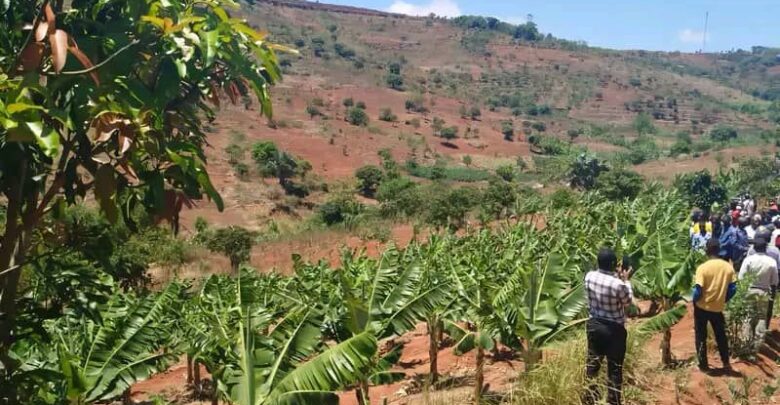
The Centre for Agricultural Transformation (CAT) has organised a field tour at a banana demonstration site in Thyolo District to promote competitive agribusiness among farmers.
The event, held on Thursday at Mafunga Village in Traditional Authority Khwethemule under Masambanjati Extension Planning Area (EPA), aimed to improve household income and ensure sustainable livelihoods through enhanced banana farming practices.
The tour showcased progress made by farmers benefiting from the CAT project, highlighting innovations and best practices in banana cultivation.
CAT Executive Director, Macleod Nkhoma, said the visit provided an opportunity to assess how the project has transformed banana farming in the area.
“We came here to assess progress under this Farmer Field School and to appreciate the fruits of the project among the communities,” said Nkhoma.
He noted that many farmers have adopted new technologies aimed at restoring lost banana varieties, which will go a long way in improving their livelihoods.
Nkhoma explained that Farmer Field Schools and knowledge-sharing among lead farmers have enabled smallholder farmers to gain skills that boost banana production.
“We are encouraging farmers, community members, traditional leaders, extension workers, and the agriculture office to take ownership of the CAT project to ensure its sustainability,” he added.
He emphasized that the goal is to revive the prominence of traditional banana varieties, such as Nthochi ya Molere, which were once common in Thyolo.
Thyolo District Director of Agriculture Services, Jackson Mvula, commended the project for strengthening public-private partnerships aimed at revitalizing banana farming in the district.
He said the initiative is critical to restoring the crop’s economic value, which was heavily impacted by the Banana Bunchy Top Virus (BBTV) outbreak.
“Before the BBTV outbreak, many farmers depended on banana growing. People built iron-sheet houses and managed to pay school fees from banana proceeds,” said Mvula.
Lead farmer, Henry Makungwa, described the CAT project as a game changer, noting its role in improving banana cultivation and raising living standards among farmers.
“Banana cultivation has allowed me to provide necessities for my family, pay school fees, and build a house,” he said.
Makungwa urged fellow farmers to adhere to best cultivation practices and embrace new technologies in banana farming to maximize productivity and income.
Senior Chief Khwethemule praised CAT for its efforts in reviving banana cultivation, emphasizing that the initiative would help restore the district’s lost banana varieties.
“We used to rely heavily on banana production in the past, so this project will reduce that burden,” he said.
He encouraged other stakeholders to emulate CAT by supporting farmers with banana suckers across the district.
Through the initiative, CAT works closely with farmers in both Thyolo and Mulanje to revive banana cultivation and promote best agricultural practices.
The project underscores the importance of competitive agribusiness, knowledge sharing, and sustainable farming as tools for improving livelihoods and boosting economic resilience in Malawi’s rural communities.
By empowering farmers with modern techniques and access to quality planting materials, the CAT project is restoring hope and prosperity for banana growers in Thyolo.